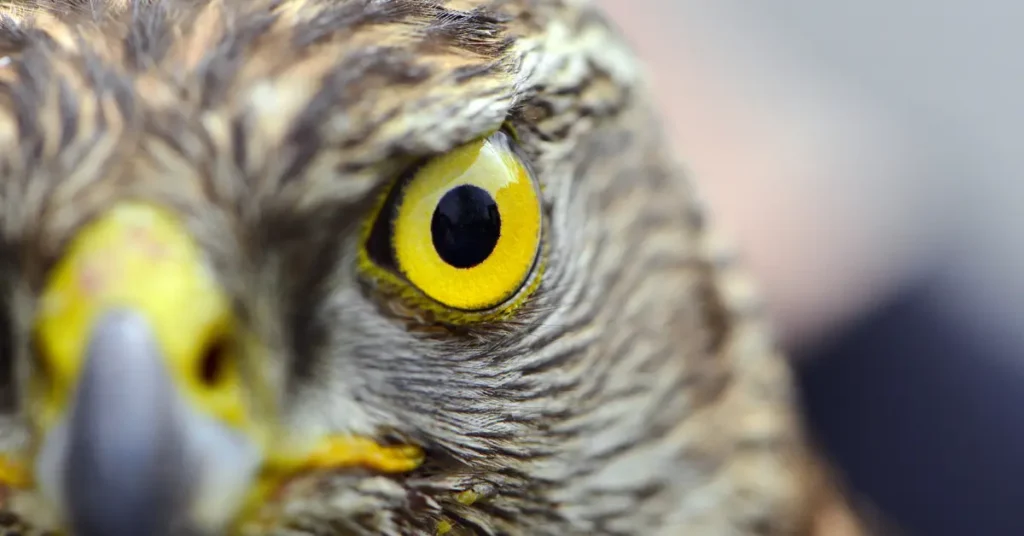
Have you ever stopped to think about what falconry is and what happens before a bird of prey takes flight?
Falconry is an ancient practice based on the handling and training of birds of prey, built upon observation, care, and a relationship of trust between the falconer and the bird.
In Brazil, there's a place where you can see this exciting technique up close: the Falconry Center at Eco Park Foz.
In this content, you will better understand how this practice works, what the role of falconers is before and during flight, and how the Falconry Center at Eco Park Foz works to conserve birds of prey.
What is falconry?
Falconry is an ancient practice of managing birds of prey based on the relationship between the falconer and the bird.
It is one of the oldest practices in the relationship between humans and animals. Traditionally, it involves training birds of prey to fly in open environments, covering large areas and developing their natural abilities.
Falconry requires daily training, constant observation, health monitoring, physical conditioning of the birds, and most importantly: trust.
For over 3,000 years, different civilizations have developed the art of managing birds of prey based on trust.
It's not domestication; the bird isn't "trained" like a dog. The falconer learns to observe what the bird shows. The way it positions itself, its gaze, the tension in its body. Every detail indicates the right moment to act or retreat.
The bond between falconer and bird is built gradually, with consistency and respect for the animal's rhythm.
In fact, this practice is so significant that, in 2016, UNESCO recognized falconry as an intangible cultural heritage of humanity .
How falconry works at Eco Park Foz
At Eco Park Foz, we don't engage in that type of field activity or hunting. Our falconry knowledge is applied to bird care, physical training, stimulating natural behaviors, and environmental education initiatives.
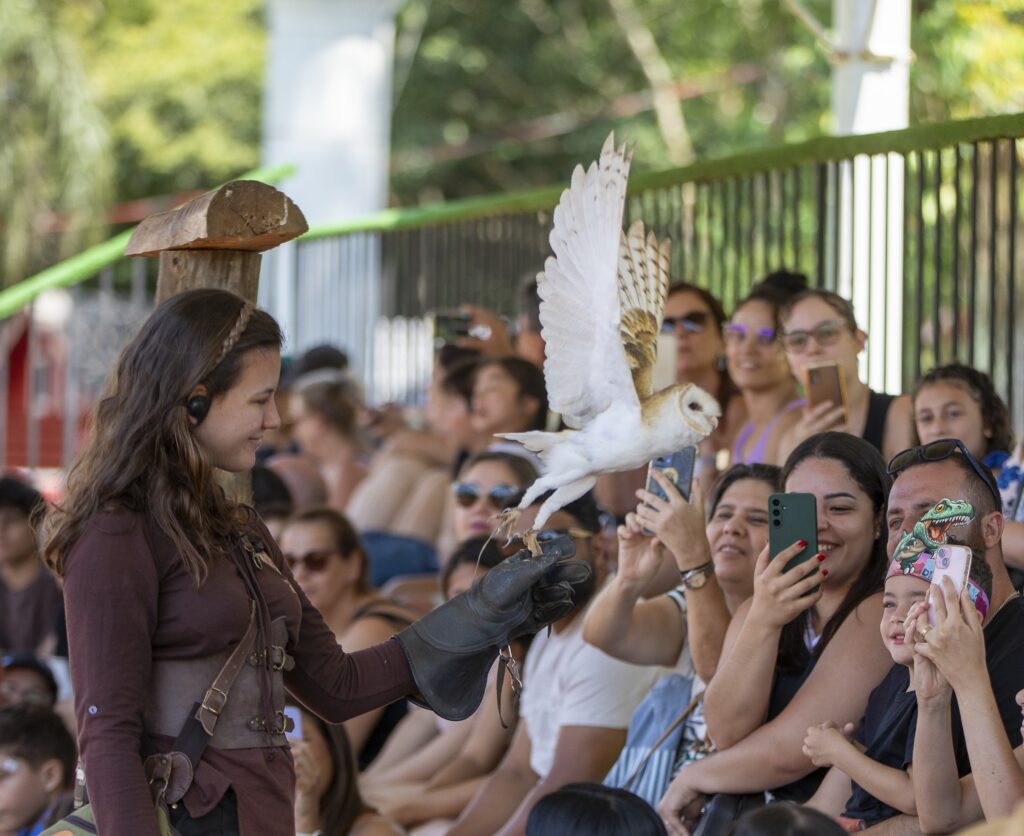
During the birds of prey's flights, it's possible to observe this work in action. The birds move through the area, gain altitude, and interact with the falconers in a way that respects the behavior of each one.
In the air, every movement reveals this care. The flapping of wings has rhythm, the gaze follows everything around it, and the flight happens in alignment with the behavior of each bird.
Furthermore, many of these birds arrived after difficult situations, such as trafficking, mistreatment, or accidents. What you see there is part of a recovery process that doesn't happen quickly.
What makes falconry at Eco Park Foz so special?
On a daily basis, our professionals closely monitor each bird individually and use this management as part of our environmental education work, bringing our visitors closer to this reality in a more conscious way.
Our falconers work daily on the physical conditioning of the birds, meticulously observing the behavior of each animal and, often, rehabilitating birds rescued from trafficking and situations of mistreatment .
Behind every flight lies a daily effort. We monitor their health, adjust their care, and pay attention to every detail. If a bird isn’t well enough to fly that day, it doesn’t fly. Their well-being always comes first.
And there’s one detail that makes all the difference: Eco Park Foz is home to the only Falconry Center in Brazil and South America, which sets the park apart, both in terms of its facilities and the type of work it carries out.
Technique, ethics and passion: what sustains this work.
What distinguishes responsible falconry from anything else is the combination of three elements that cannot exist separately.
The first is technique , because handling birds of prey requires in-depth knowledge of biology, animal behavior, and veterinary medicine.
Secondly, ethics . After all, the animal is at the center of everything. Every decision about when to fly, how to interact, and how much to demand from the bird's well-being.
Finally, passion , because no technique can sustain this work without the flame of someone who truly believes in what they do. The falconers at Eco Park carry the responsibility of caring for animals that have often been deeply affected by human actions.
FAQ: Falconry
Yes, as long as specific animal handling and welfare standards are followed. In places like Eco Park Foz, falconry is applied with an educational and environmental focus.
The falconer monitors the birds' behavior, takes care of their health, adjusts their management, and works on building a relationship with the animal on a daily basis.
No. They remain wild animals. The work involves handling and observation, not domestication.
One of the places where you can see this work up close is Eco Park Foz, home to the only falconry center in South America.
Yes. In places like Eco Park Foz, falconry serves as a source of inspiration and a management tool, contributing to the birds’ well-being and raising environmental awareness.
Discover the Falconry Center at Eco Park Foz
Seeing the work of the Falconry Center up close is to understand, in practice, how to transform ancient knowledge into conservation.
If you are in Foz do Iguaçu, it's worth including this moment in your itinerary and closely observing the flights of birds of prey. You can witness this event at two times throughout the day: at 10:30 am or at 4:00 pm.
The Falconry Center at Eco Park Foz awaits you. Come and witness the flights of birds of prey and experience firsthand the art and science that unfolds daily behind the scenes of conservation.
Secure your ticket in advance and reserve your visit.
Cover image: misplaced_photon by Getty Images